
- Home
- Articles
- Privacy Policy
- Home
- Articles
- Privacy Policy
Outcome Bias
Outcome Bias: What is, When it is Good, When it is Bad, and How to Control it.
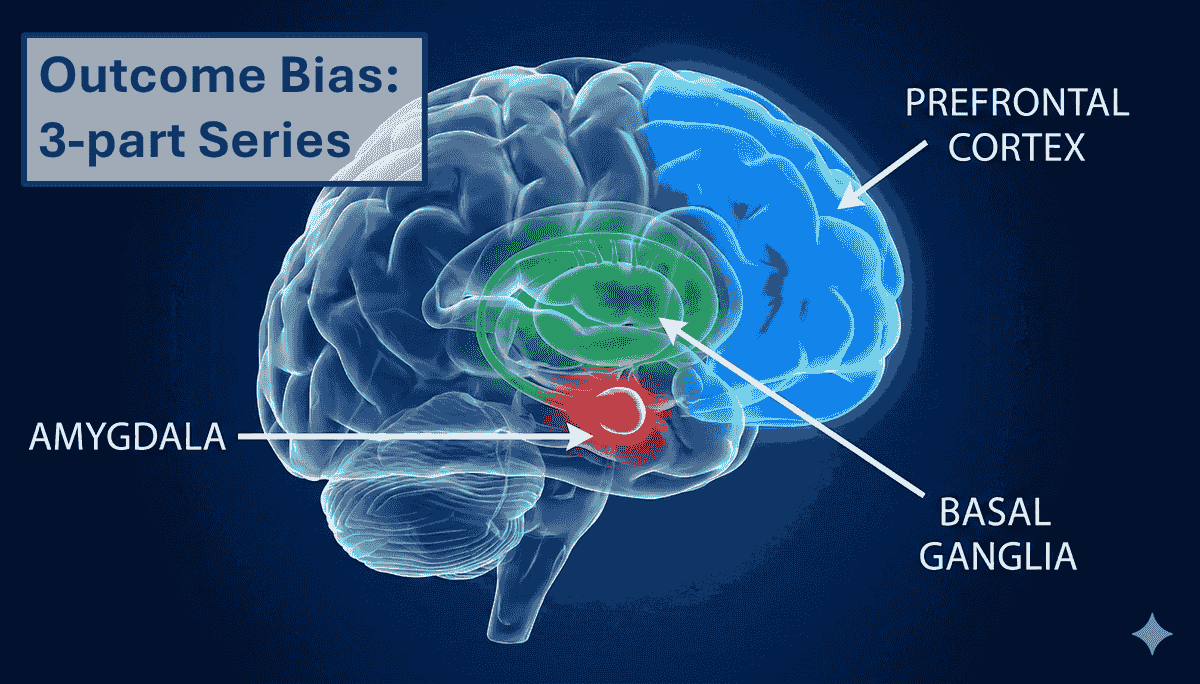
Three-Part Series
Part 1: All's Well that Ends Well. Or is it?
Part 2: Outcome Bias - Not Always the Villian
Part 3: Mitigating the Bad and Promoting the Good
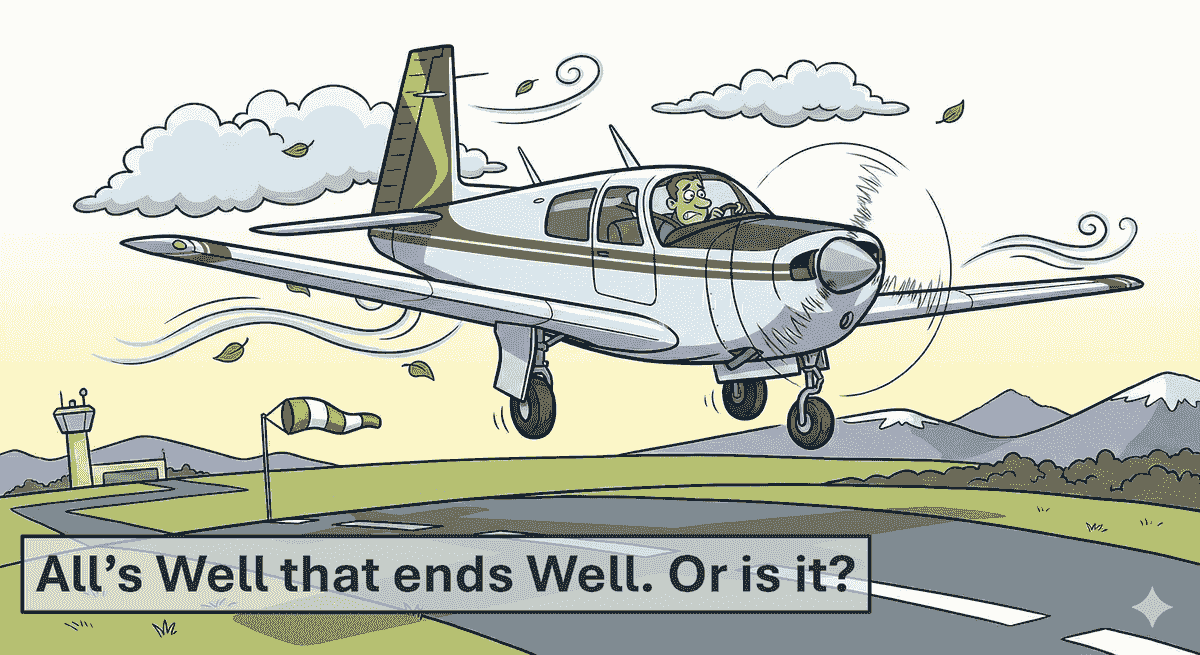
Part 1: All's Well that Ends Well. Or is it?
The outcome of a process is important, but judging success based solely on the outcome can lead to future problems.
Picture this: it’s one of those days when you just *want* to fly. No mission, no passengers, no real purpose—just the simple joy of getting airborne.
But the weather has other plans. The aviation reports are full of warnings about strong, gusty surface winds and possible low‑level windshear. The windsock isn’t exactly subtle either—it’s snapping around like it’s trying to send Morse code. So you make the smart call: today’s not a flying day. Instead, you wander down the row of T‑hangars to see if anyone else is out braving the breeze.
Then you spot it.
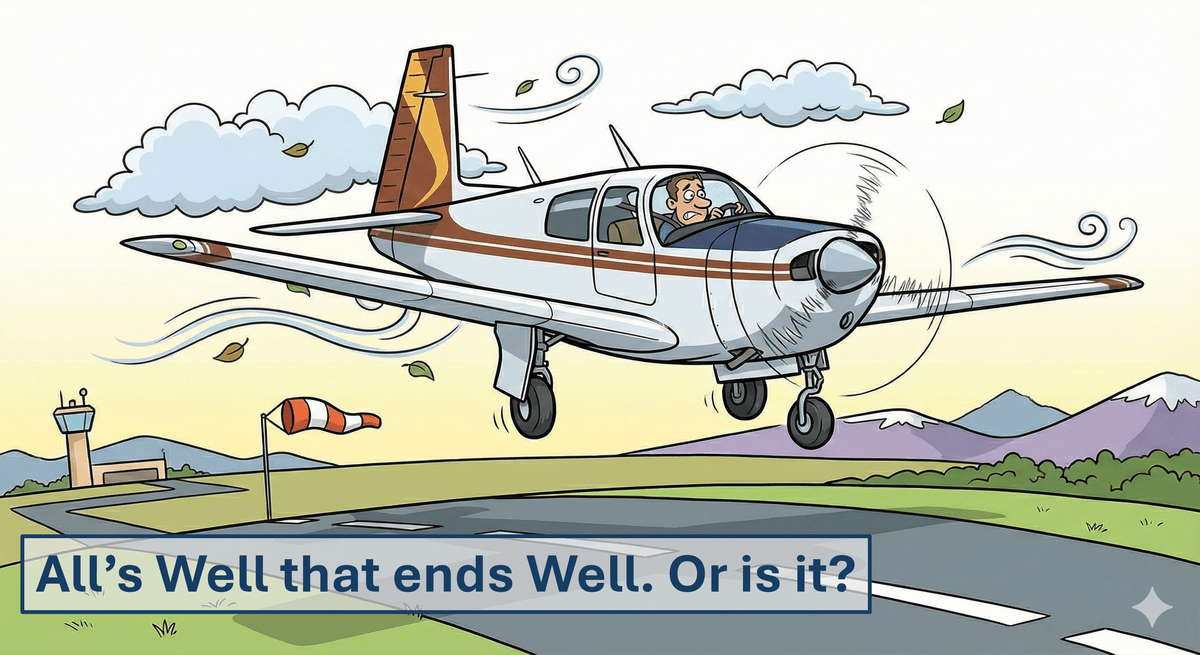
An airplane—looks like a Mooney—turning final for Runway 33. The windsock is doing its best impression of a metronome, swinging from straight out to half deflection, and the wind direction is bouncing between 020° and 050°. The pilot is clearly fighting it. The bank angles are all over the place, pitch is inconsistent, and the power setting is anything but constant. You’re waiting for the go‑around… but it never comes.
The approach keeps getting worse, and you find yourself pulling out your phone—just in case. You hold your breath as the airplane touches down firmly and swerves a bit to either side of the centerline. Somehow, the pilot slows down and taxis off toward the ramp. You exhale. Crisis averted. And like many of us would, you think, “Wow, that pilot is really good! That approach was really scary, but the pilot pulled it off.”
But… did they?
This is where outcome bias sneaks in. One of our cognitive biases is called outcome bias. It’s our tendency to judge the quality of a decision based solely on how things turned out. Good landing? Must’ve been good decisions. Bad landing? Must’ve been bad decisions.
But that’s not how reality works.
If that Mooney had ended up in the grass with a collapsed gear, a prop strike, and a bent firewall, we’d all be shaking our heads, saying, “What was that pilot thinking trying to land in those conditions?” The process didn’t change—only the outcome did.
And this isn’t just an aviation thing. Surgeons, business leaders, military commanders—history is full of people who were hailed as geniuses when things went well and condemned as fools when they didn’t. Luck often gets far more credit (or blame) than we admit.
Outcome bias also sets the stage for something even more dangerous: normalization of deviance. Every time we cut a corner, skip a step, or bend a rule—and nothing bad happens—we become just a little more comfortable doing it again. Eventually, the shortcut becomes the “new normal.” Aviation has plenty of examples of where that path leads, both in the cockpit and in maintenance hangars.
Part 2: Outcome Bias - Not Always the Villain
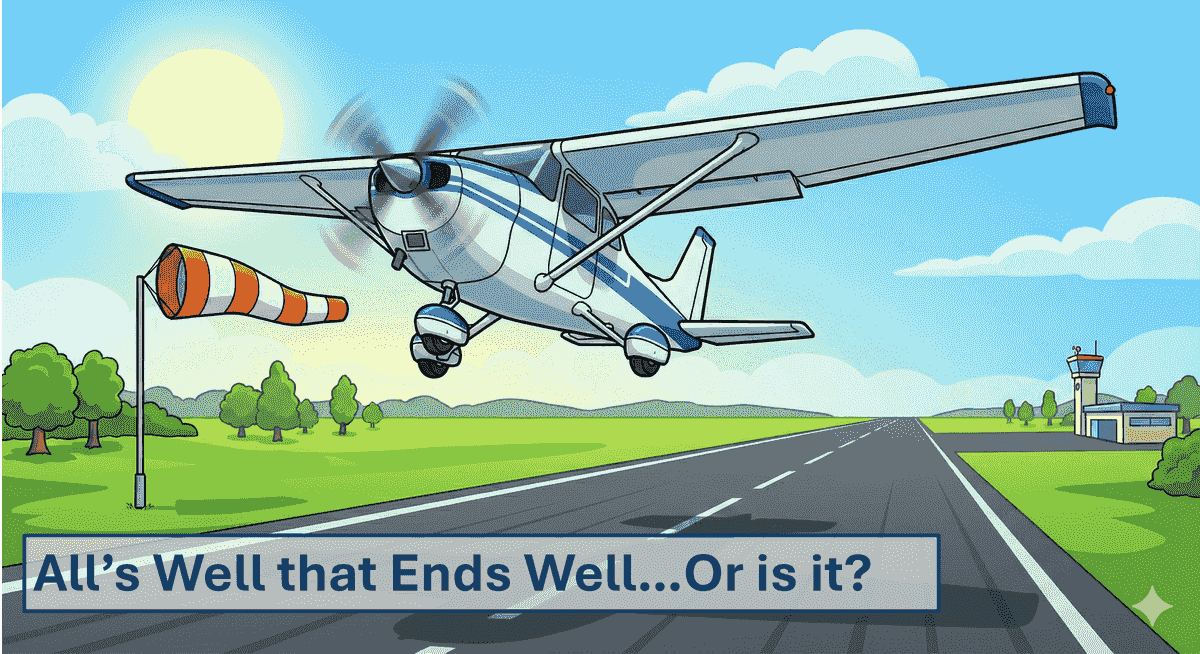
There are some positive aspects of outcome bias.
Imagine this: It’s a gorgeous day for flying. You’re rolling down a 5,000‑foot runway in a small GA airplane. There is a moderate wind right down the runway. You ease back on the yoke at rotation speed, the wheels lift, and you start that familiar, satisfying climb. Everything feels routine—until it doesn’t.
At about 50 feet, the airplane shudders. The engine’s roar fades into an eerie whoosh of wind over metal. In an instant, your world shrinks to a single urgent question: What now?
You don’t have minutes. You barely have seconds. And yet, without consciously thinking, you do exactly what will save your life: you lower the nose and aim for the runway still ahead of you. A few heartbeats later, you’re back on the pavement, rolling to a stop. Only then do you feel the adrenaline and cortisol your amygdala dumped into your bloodstream—your pulse racing, your breathing sharp and fast.
Here’s the thing: you had other options. Terrible ones. You could have frozen, holding that pitch attitude until the airplane stalled and dropped out of the sky. You could have tried the infamous “impossible turn,” attempting to get back to the runway and almost certainly spinning in from low altitude. But you didn’t. You made the right call—fast. And for that, you can thank outcome bias.
Yes, outcome bias—the same mental shortcut we often criticize—just saved your life.
Even though you’d never lived this exact scenario, you had lived it in other ways. You’d read accident reports. You’d watched training videos. You’d listened to instructors walk through engine‑failure‑after‑takeoff procedures. All that exposure built an experience background of patterns and outcomes that helped you recognize what to do.
In part-3 of this series, we will discuss some ways to mitigate the negative aspect of outcome bias and ways to amplify its positive aspects.
Part 3: Outcome Bias Mitigation
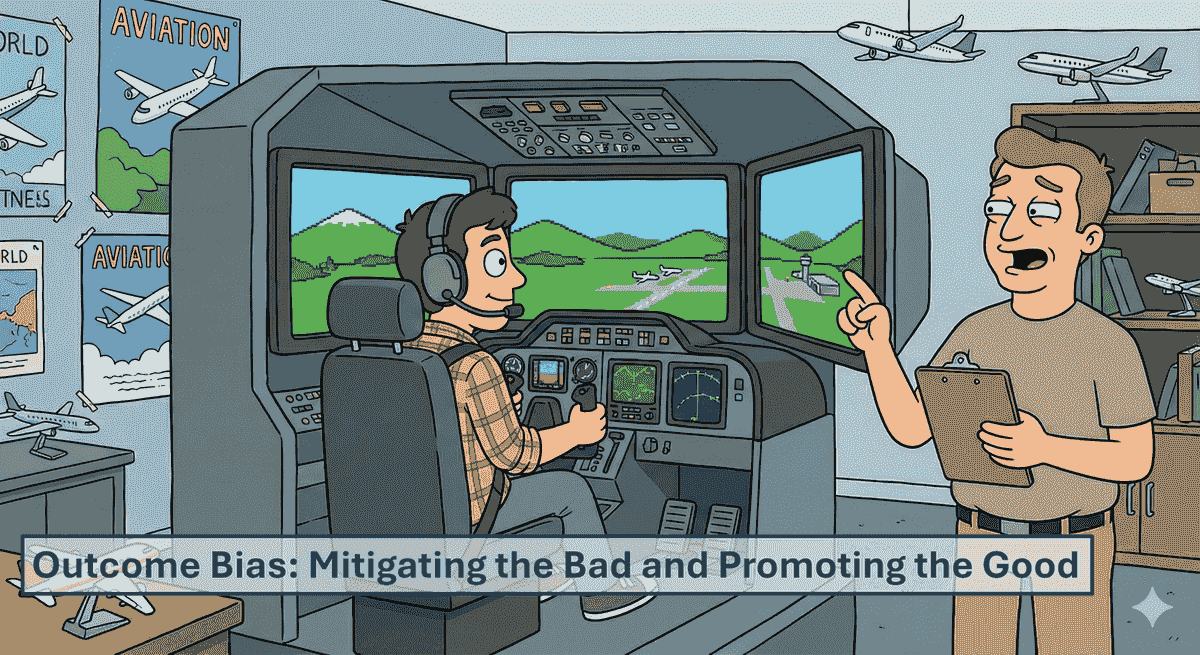
Mitigating the Bad and Promoting the Good
Outcome Bias Mitigation
If you’ve followed Parts 1 and 2 of this series, you already know outcome bias can be a sneaky troublemaker—quietly normalizing risky shortcuts—but it can also be a surprisingly helpful ally when it comes to building experience and sharpening Recognition‑Primed Decisions. Now, in this final installment, let’s talk about how to keep the good parts while taming the bad.
Rewiring the Brain for High‑Stress Moments
Whether you’re a pilot, surgeon, firefighter, or anyone who has to perform under pressure, your training is really about one thing: teaching your brain not to panic when things go sideways. As the document puts it, “Training for high‑stakes environments… is essentially the process of rewiring the brain to prevent the ‘Amygdala Hijack’ from taking over.”
You’re not trying to erase fear—that’s impossible. You’re building a mental bridge that keeps your Prefrontal Cortex (the calm, rational part) online when the adrenaline hits.
Stress Inoculation: The Brain’s Version of Reps at the Gym
Enter Stress Inoculation Training. Think of it as exposure therapy for emergencies.
By repeatedly practicing a scenario—say, an engine failure right after takeoff—you’re shifting the response from slow, deliberate thinking to fast, automatic action. This moves the response from the Prefrontal Cortex (slow, deliberate thinking) to the Basal Ganglia (automatic, habitual action).
What used to feel like a heart‑stopping crisis becomes a familiar routine. Your brain stops treating it as a brand‑new threat, which means your adrenaline stays in check and your decision‑making stays sharp.
Visualization: The Mental Dress Rehearsal
Another powerful tool is visualization, essentially a mental simulator you can run anytime, anywhere.
When you vividly imagine a crisis and your successful response to it, your brain activates the same neural circuits as if you were actually doing it. When the real emergency hits, your brain gets a flash of déjà vu. It’s been here before. It knows what to do.
Speeding Up the OODA Loop
Most pilots know the OODA Loop—Observe, Orient, Decide, Act. It’s a great model, but under stress, it can feel painfully slow.
Simulation and mental rehearsal turbocharge it. The more scenarios you’ve walked through—physically or mentally—the faster each step becomes. You’re not guessing; you’re recognizing.
Putting It All Together: Your Personal Training Plan
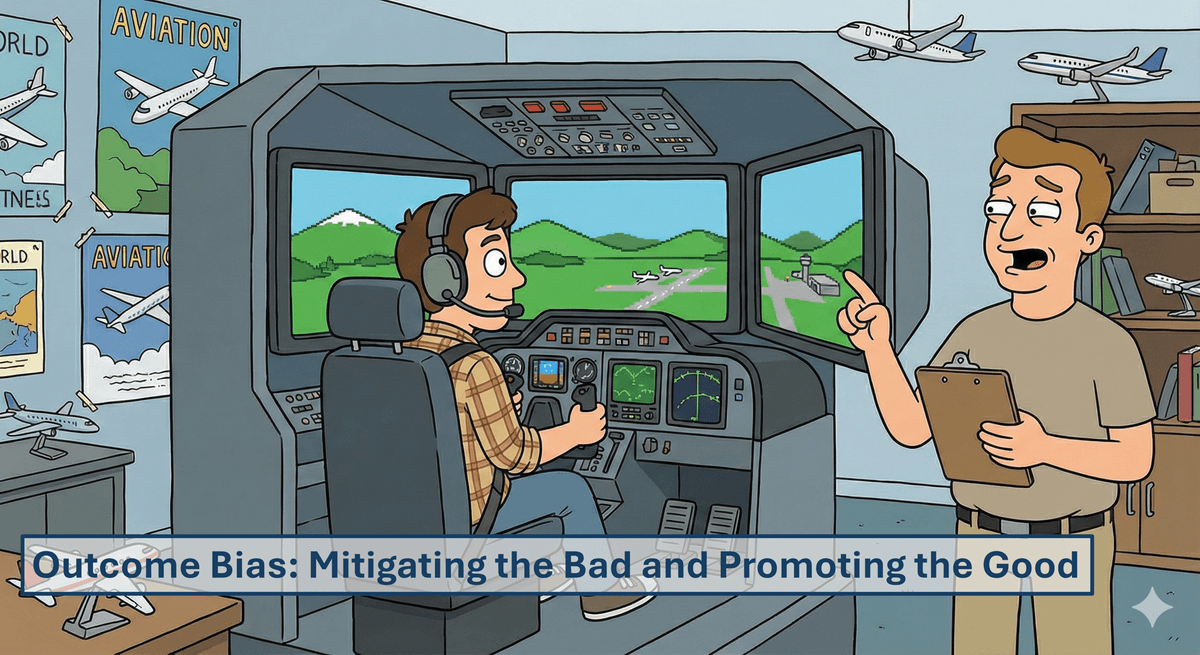
- Find a simulator. Anything from a full‑motion Redbird to a desktop setup works.
- Grab a CFI or experienced pilot. Practice emergencies tailored to your aircraft.
- Do daily mental reps. A few minutes of visualization goes a long way.
- Be realistic but creative. Ask yourself, “What could happen, and what exactly should I do?”
- Walk through every motion. Throttle, prop, fuel tanks, breakers, radios—see your hands doing each step and mouth any communications whether to ATC or to your passengers.
The goal isn’t to eliminate surprise—it’s to make sure surprise doesn’t eliminate you.


Copyright © 2026 Gene Benson. All rights reserved.